The digital revolution has transformed how we bank, shop, and communicate. In 2026, the shift toward digital finance has made insurance more accessible than ever. However, a common question still lingers in the minds of many Indian consumers: online insurance safe or not? While the convenience of buying a policy in minutes is undeniable, understanding the security protocols, regulatory oversight, and potential risks is essential for every policyholder.
This guide explores the layers of protection provided by the IRDAI (Insurance Regulatory and Development Authority of India) and helps you decide for yourself: is online insurance safe or not?
1. The Regulatory Shield: How the Government Protects You
To answer if online insurance safe or not, one must first look at the regulator. In India, no insurance company—whether digital or traditional—can operate without a license from the IRDAI.
Equal Legal Standing
According to the IRDAI, a policy bought online has the same legal validity as one bought through a physical agent. The “e-policy” is a legally binding document protected by the Information Technology Act.
- DigiLocker Integration: In 2026, most e-policies are pushed directly to your DigiLocker, ensuring that even if you lose the PDF, your proof of insurance is stored in a government-verified digital vault.
- Direct Supervision: Digital platforms are audited regularly to ensure they follow strict data privacy and claim settlement norms.
2. Why the “Online” Route is Often Safer
When people ask if online insurance safe or not, they often overlook the risks associated with the traditional “offline” route.
Transparency vs. Human Error
- Direct Information: When you buy online, you enter your own health and age details. In the offline world, an agent might accidentally (or intentionally) misreport a medical condition to get the policy issued quickly, which can lead to a rejected claim later.
- No Premium Misplacement: Online payments go directly to the insurer’s official account. There is zero risk of an agent collecting your cash or cheque and failing to deposit it with the company.
- Real-time Verification: You receive an instant acknowledgment and a policy number, eliminating the “waiting period” where you might wonder if your policy has actually been issued.
3. Security Layers in Digital Insurance
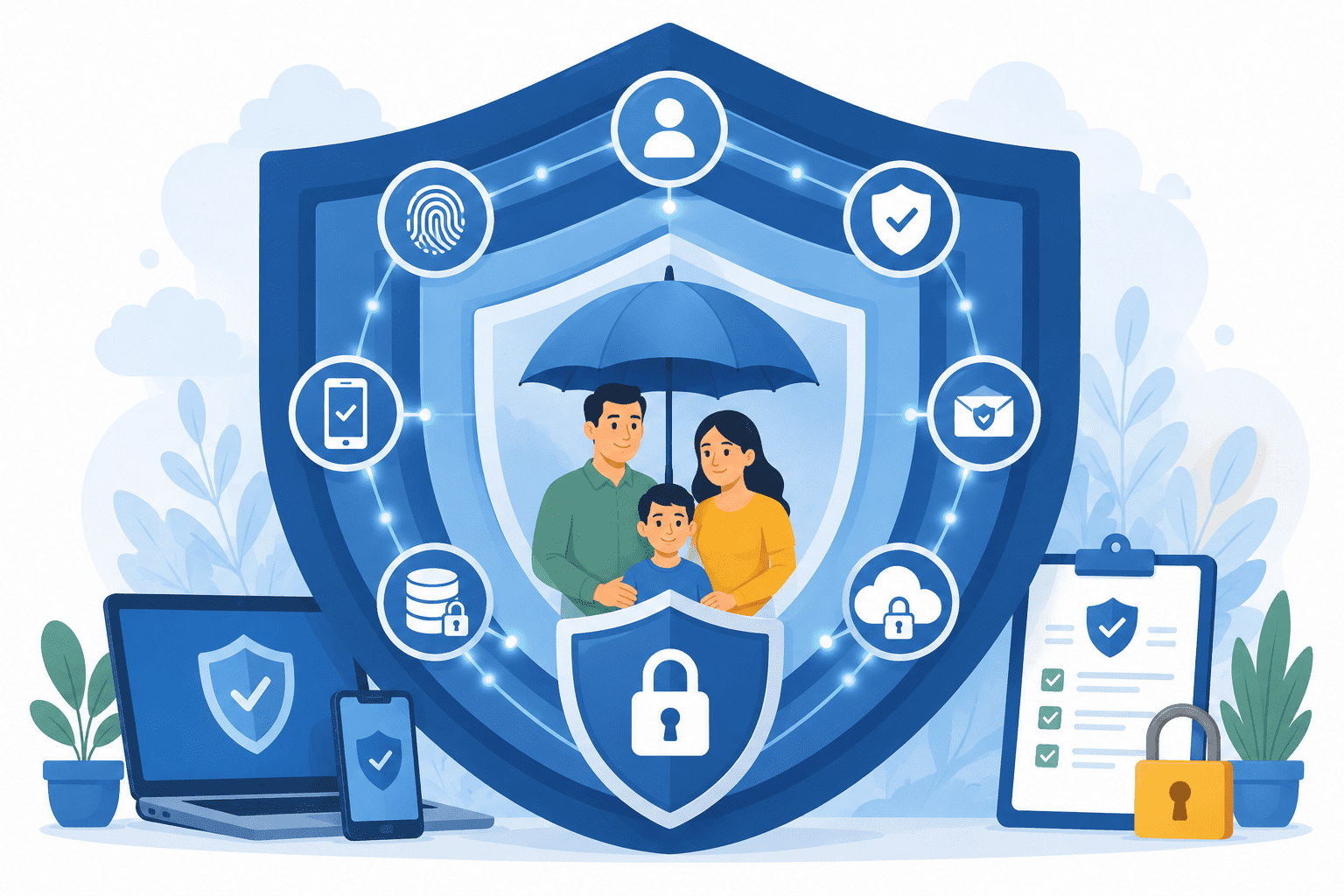
To evaluate if online insurance safe or not, we must examine the technology used. Reputable insurance portals and official company websites use banking-grade security to protect your data.
Key Security Features:
- SSL Encryption: Look for the “lock” icon in the browser address bar. This ensures that the data you send (like your Aadhaar or PAN details) is encrypted and cannot be intercepted by hackers.
- Two-Factor Authentication (2FA): Most portals in 2026 require an OTP (One-Time Password) for login and payment, adding a secondary layer of protection.
- Data Localization: IRDAI mandates that insurers store sensitive Indian consumer data within servers located in India, providing better legal protection for your privacy.
4. Comparing Online vs. Offline Security
This table helps you weigh the safety factors of each method to determine if online insurance safe or not for your specific comfort level.
| Feature | Online Insurance | Offline (Agent-based) Insurance |
| Payment Safety | Direct to company via secure gateway | Risk of cash/cheque mishandling |
| Data Accuracy | High (User-inputted) | Moderate (Subject to agent’s interpretation) |
| Price Transparency | High (No hidden commissions) | Low (Agent might push high-commission products) |
| Policy Issuance | Instant or very fast | Can take several days/weeks |
| Document Storage | Digital (Cloud/Email/DigiLocker) | Physical paper (Can be lost or damaged) |
5. Potential Risks: How to Stay Secure
While the platform itself is secure, human-targeted scams exist. If you find yourself wondering if online insurance safe or not, it is often because of “Phishing” or fake websites.
How to Identify a Fake Insurance Portal:
- Check the URL: Ensure it is the official website (e.g.,
[www.hdfclife.com](https://www.hdfclife.com)and notwww.hdfc-life-deals.xyz). - Avoid “Too Good To Be True” Offers: If a website offers a ₹1 Crore life cover for ₹50 a year, it is likely a scam. Stick to established brands or verified aggregators.
- The Calling Scam: Official insurers will never call you to ask for your bank password or UPI PIN to “process a claim.”
6. The Impact of 2026 Technology: AI and Fraud Detection
In 2026, the question of online insurance safe or not is being answered by advanced AI.
- Fraud Analytics: Insurance companies now use AI to detect if a website is pretending to be them. These “spoof” sites are often taken down within hours.
- Blockchain Records: Some insurers have started using blockchain for policy records, making it impossible for anyone to tamper with your policy details once the premium is paid.
7. Claim Settlement: The Ultimate Safety Test
The real test of whether online insurance safe or not is the claim process.
- Cashless Claims: For health insurance, online-enabled companies offer “Express Cashless” where the hospital and insurer communicate digitally. This is often faster than traditional paper-based claims.
- Claim Settlement Ratio (CSR): Digital-first companies like ACKO or Digit, as well as traditional giants with strong online presence (HDFC, ICICI, LIC), report CSRs above 98%. The mode of purchase does not lower your chances of a successful claim.
8. Is Online Insurance Safe or Not? (Final Verdict)
The verdict is a resounding YES, provided you use official channels. Buying insurance online is not only safe but often safer than offline methods because it removes the “middleman risk” and provides a digital audit trail of every interaction.
3 Tips for a Safe Online Purchase:
- Verify the License: Check the IRDAI website to see if the portal or company is a licensed “Web Aggregator” or “Insurer.”
- Use Secure Connections: Never buy insurance using a public Wi-Fi network at a cafe or airport.
- Read the Policy Wording: The biggest “safety” issue isn’t the technology, but the user not reading the exclusions. Spend 10 minutes reading the “What is not covered” section.
9. Common Myths Debunked
- Myth: Online companies don’t have offices, so they will run away with my money.
- Fact: Every online insurer is mandated by IRDAI to have a physical grievance redressal office. They are highly regulated corporate entities.
- Myth: Claiming is hard if I buy online.
- Fact: In 2026, claim filing is almost entirely digital for everyone. Whether you bought from an agent or a website, you will likely use an app to file your claim.
10. Conclusion
As we move further into 2026, the question online insurance safe or not will likely disappear as digital becomes the default. By following basic cybersecurity hygiene—checking URLs, using strong passwords, and buying from IRDAI-licensed entities—you can enjoy the convenience and cost-savings of digital insurance without any fear.
The safety of your policy is guaranteed by the law, while the safety of your transaction is guaranteed by modern encryption. Choose digital to save time, save money, and gain complete control over your family’s protection.
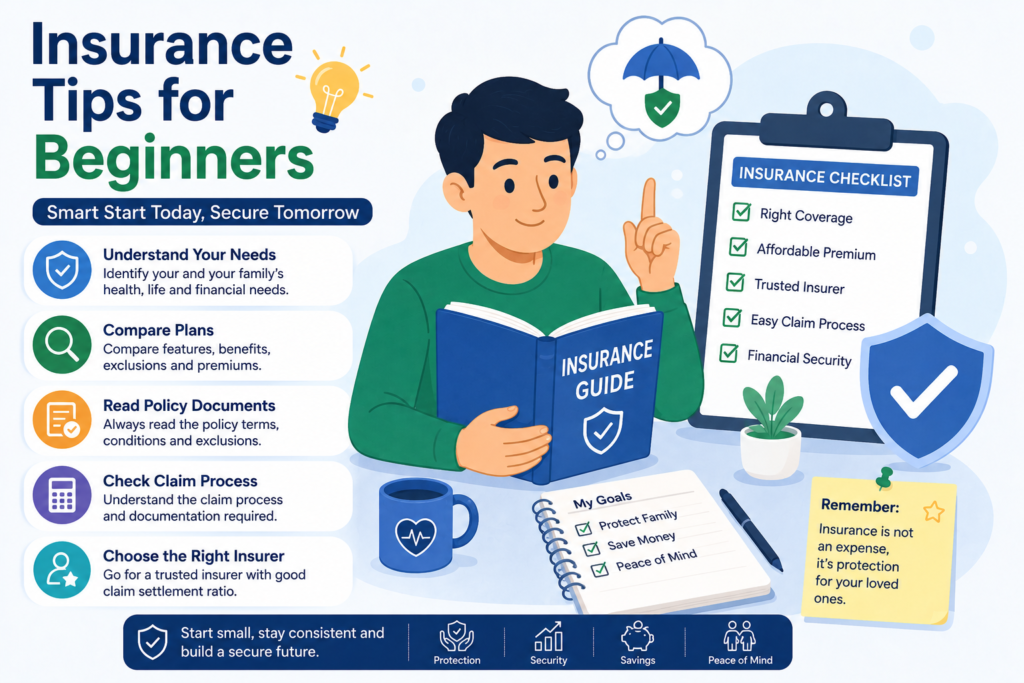
Read: Insurance Tips for Beginners: The Ultimate 2026 Guide to Financial Security
Reference Links for Fact-Checking:
- IRDAI (Insurance Regulatory and Development Authority of India): https://irdai.gov.in/
- National Portal of India – Digital Insurance Guidelines: https://www.india.gov.in/
- Life Insurance Council of India – Consumer Safety Page: https://www.lifeinsurancecouncil.org/
Disclaimer: This article is for educational purposes only and does not constitute financial or legal advice. Insurance products are complex; please consult with a certified advisor before making a final decision.